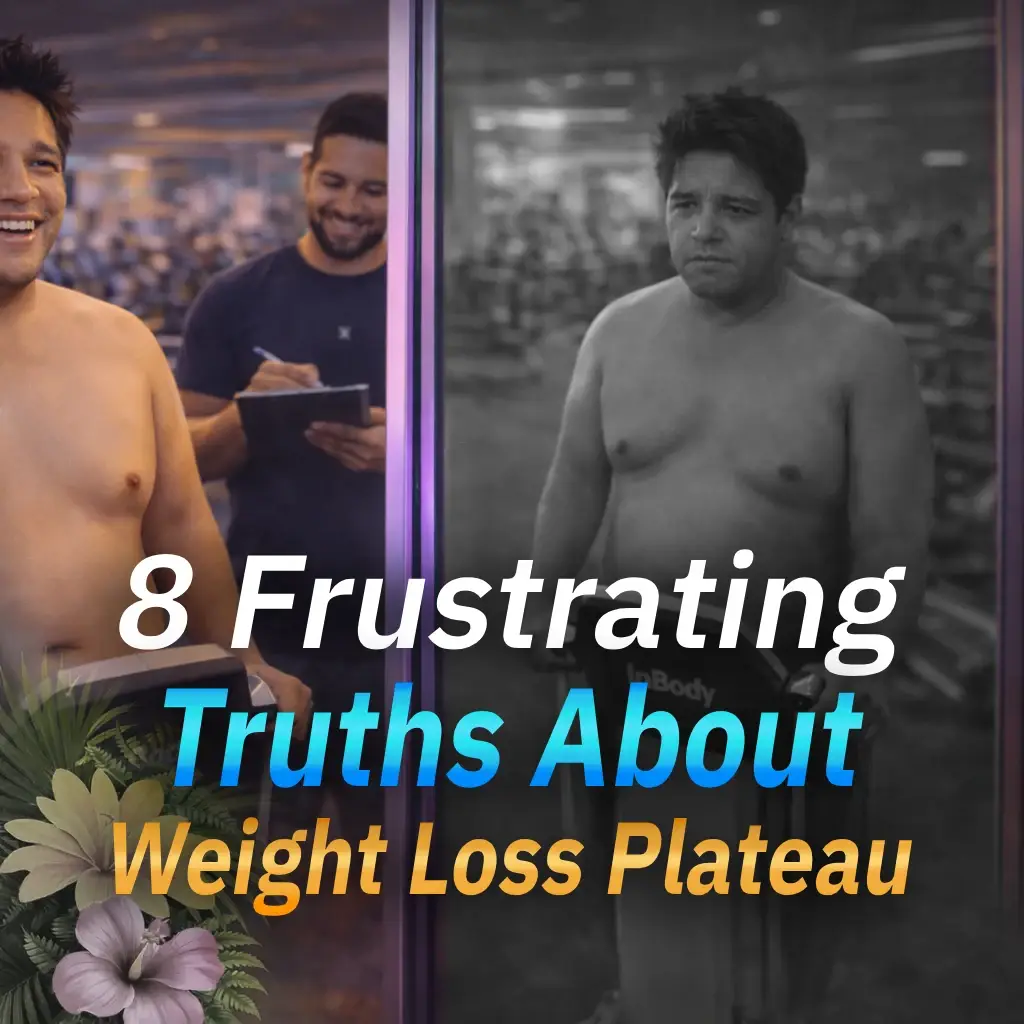
What Is a Weight Loss Plateau?
A weight-loss plateau happens when your body reacts to eating fewer calories and being more active. Your metabolism slows down as a natural survival response, which, sadly, can stall your weight loss progress.
When you lose weight and eat less, your body adapts by burning fewer calories, saving energy, but making it harder to lose more weight.
But you know what? You actually need to pat yourself on the back, because your body is trying and successfully protecting you from sudden demise due to malnourishment when you go into ‘starvation mode’.
If you’re trying to lose weight for the first time, hitting a plateau can be confusing and discouraging. People who have gone through it before know it’s a setback, but they also recognize it as part of the process.
In this blog, we will answer 3 main questions:
Why do people experience weight loss plateaus?
How can you reset your metabolism?
How can MPHG help you break through a plateau?
Why Weight Loss Plateaus Happen?
And Why It Feels So Frustrating?
Weight loss is one of the most common fitness goals, whether for health benefits, to achieve sculpted-body goals like magazine models, or even just to feel good about your personal image.
You’ve started eating healthier, getting more active, or maybe even joined a gym. Usually, you see results pretty quickly: your clothes fit better, you have more energy, and the number on the scale goes down.
But after a while, your weight loss slows or even stops. Even if you keep up your workouts, eat mindfully, and stick to your routine, you might still hit what’s called a weight-loss plateau.
Weight loss plateaus are normal.
But staying stuck? That’s optional.
So, how long does a weight loss plateau last?
If your weight has not changed for 3 to 4 weeks, you are likely experiencing a weight-loss plateau, even if you are adhering to your plan. Research indicates that these plateaus can persist for 12 weeks or longer without additional modifications (Fothergill et al., 2016). This stagnation often leads to frustration and may make it tempting to abandon your efforts.
Acceptance is the key: it might seem frustrating at first, but knowing that phases like this are normal and affecting 85% of people in weight-loss programs is the first step to moving past them. If you look at it positively, it just means your body has adjusted and is working more efficiently. The human body is really amazing, right? The design and complexity are filled with so many parts working together to keep you stable and alive.
Truth #1: Metabolic Adaptation
Your Body Is Designed to Adapt, Don’t Fight It
As mentioned earlier, metabolic adaptation happens when you reduce calorie intake, and your body starts to conserve energy. The amount of food that once helped you lose weight can become your new maintenance level. This is your body’s way of recalibrating while finding balance.
Tip #1: Reassess Calorie Intake
Start with this:
Reassess your calorie intake based on your current weight and activity level, rather than relying on your old plan. As the body changes, nutritional needs must be adjusted accordingly.
Adjust your calorie intake based on your current weight, activity level, and goals to maintain a healthy calorie deficit without resorting to extreme dieting.
Where MPHG Comes In?
Even if you already have a nutritionist, Maui Powerhouse Gym is here to support you. MPHG offers personalized nutrition and training adjustments based on your progress, ensuring your plan evolves as your body adapts so your progress doesn’t stall.
Truth #2: Your Body Conserves Energy to Protect You
Your Body Is Designed to Adapt, Don’t Fight It
Another thing worth mentioning is that your body perceives prolonged calorie reduction as a potential threat.
To protect itself, your body becomes more prudent and reduces the energy output during daily activities and workouts. The body also adapts quickly to repetitive exercise.
At the same time, performing the same workouts with the same intensity week after week leads to diminished returns. The body becomes efficient at handling familiar routines, and less stimulus is created for change.
Without progression, increasing resistance, intensity, or variation, the results will eventually stall.
Tip #2: Apply Progressive Overload
Try this first:
Apply progressive overload. Try to improve your workouts each week by adding more reps or sets, or by increasing the weights and resistance you use. This challenges your muscles and helps your body adapt to new demands.
This may include:
Increasing weights
Adding repetitions or sets
Improving exercise form and control
These changes help your body keep adapting and getting stronger.

How MPHG helps:
MPHG creates training programs that safely challenge your body, helping you avoid plateaus and physical burnout. Workouts can include progressive strength training, Power45 HIIT, Bicycle Classes, and Circuit Training at The Studio. You can join individual sessions or take part in monthly group classes.
Truth #3: Muscle Loss Slows Your Progress
Less muscle = slower metabolism.
Strength training is important for maintaining and building muscle mass. Without strength training, your body may lose both muscle and fat.
Because muscle is important for your metabolism, losing it can make it harder to burn calories efficiently.
Tip #3: Incorporate Strength Training
Try this simple adjustment:
Add resistance training to your existing routine to preserve and build muscle. Increased muscle mass supports a higher metabolic rate, allowing the body to burn more calories at rest.
You can include variations of free weights (dumbbells/barbells), weight machines, resistance bands, and medicine balls, and even use your body weight to complement your progressive workouts. For beginners and those recovering from injury, resistance training with proper guidance can be safe and very effective.
Inside MPHG, you can receive:
MPHG offers strength-training programs customized to your fitness level, whether you’re a beginner, veteran, or recovering from surgery.
In Kihei, Maui Powerhouse Gym has a range of options for both visitors and residents, including group classes and personal training. PowerPump Classes and other specialized sessions are available.
Truth #4: Small Habits Can Quietly Undo Your Progress
You might stick to your diet plans, but small increases in portion sizes, such as adding an extra spoonful of rice to your plate or grabbing a handful of nuts while cooking, and untracked snacks, like sipping a sweetened beverage or sampling food while grocery shopping, can slowly erode your progress.
Portion sizes or small snacks may go unchecked, or you may eat more of the foods you think are healthy, quietly undoing progress.
Over time, these small habits can remove the calorie deficit you need to keep losing weight.
Tip #4: Use simple tracker or reminder
Quick fix:
Be more mindful of portion sizes and track your intake consistently, even on “good days.”
With the right guidance:
Accountability helps you stay consistent to reach your goals. It becomes easier to stay aware of the habits that may be holding you back. MPHG can be your partner/ weight loss gym-buddy.
Truth #5: Early Results Are Not Always Fat Loss
That fast progress at the start? A lot of it is water weight. It’s often due to changes in glycogen storage.
Once this stabilizes, fat-loss progress may seem slower, but it still continues, and can be misunderstood as ‘stopped.’
Tip #5: Monitor Progress Beyond the Scale
Try this instead:
Weight alone does not always reflect meaningful progress. Track progress beyond the scale, such as body measurements, strength levels, how your clothes fit, and energy, to provide a more accurate picture of improvement.
Where MPHG makes a difference:
MPHG tracks multiple indicators of progress to provide a more accurate and motivating representation of your results.
Additionally, the facility offers access to an inBody Scanner, which enables you to monitor changes in body composition, such as muscle mass, body fat percentage, and hydration levels.
This comprehensive assessment supports more precise tracking of your progress beyond simple weight changes.
Truth #6: Stress and Recovery Directly Affect Fat Loss
Chronic stress, poor sleep, and inadequate recovery can affect hormones that regulate appetite and fat storage, making progress more difficult.
Adequate rest, proper sleep, and stress management are essential components of fat loss.
High cortisol levels contribute to poor sleep quality, and high stress levels can affect hormones that regulate hunger, metabolism, and fat storage.
For individuals recovering from surgery or managing physical limitations, improper recovery can further slow progress.
Tip #6: Prioritize Recovery
Start here:
Prioritize the quality of your sleep based on your circadian rhythm. Though the usual 7-8 hours of sleep is ideal, it's best to consider your own Chronotype, as it’s unique to each person and cannot be boxed into a single category.
Managing your stress levels may not be easy and can be a long-term effort, but there are ways to do so, such as deep breathing, focusing on the brighter side, avoiding negative self-talk, and even practicing gratitude.
Recovery allows the body to repair and rebuild, enabling it to perform optimally during future workouts, but it’s not limited to physical recharge - mindfulness, faith & spirituality can also be part of it as meditation.
How we support you:
We integrate recovery strategies into your program, ensuring your body can perform and respond effectively. Some of the meditative exercises include Prosperity & Power Yoga every Monday and Friday, mindfulness-focused fitness classes like “The Mindful Muscle”, and other guided sessions.
Truth #7: Extreme Dieting Often Backfires
Aggressive calorie restriction may produce short-term results, but it often leads to fatigue, poor performance, and eventual weight regain.
Tip #7: Keep diet in moderation
For the best result:
Focus on sustainable, moderate changes instead of drastic cuts.
The MPHG approach:
MPHG will help you build long-term, sustainable weight management habits, not fad, quick fixes.
Truth #8: The Closer You Get, The Harder It Becomes
Tip #8: Keep calm and be patient
What to do next:
Be patient and make smaller, more precise adjustments instead of extreme changes.
How MPHG guides you:
MPHG continuously refines your program to match your progress, helping you move forward even during the most challenging stages./p>
The Takeaway: A Smarter Approach to Sustainable Fat Loss
Weight loss is not a straight-linear process, and plateaus are a natural part of the journey, experienced by beginners and experienced individuals alike. Plateaus are temporary.
By identifying their underlying causes and following a structured, personalized health and workout plan, you can overcome stagnation and continue progressing toward your weight goals.
Plateaus as a Turning Point
Instead of seeing a plateau as the end, view it as a turning point.
It shows that your body has adapted, and it’s time to change your approach.
With the right strategy, you can get past plateaus and start making progress again.
Take the Next Step
If you’re stuck in a plateau right now, it might be time to try a new approach.
A structured program, supported by experienced professionals, can help you move forward safely and effectively, whether you’re new to this or returning after surgery.
How a Maui Powerhouse Gym Environment Supports Your Breakthrough

Access to Equipment
Having lots of equipment gives you more variety and ways to progress in your workouts, which is key to breaking through plateaus.

Structured Setting
A dedicated fitness environment minimizes distractions and reinforces consistency.

Supportive Community
Being surrounded by others working toward similar goals can improve motivation and adherence.

Professional Guidance
Access to trained professionals ensures that workouts remain effective, safe, and aligned with individual goals.

Ready to break through your weightloss plateau?
Hall, K. D. (2023). Physiology of the Weight Loss Plateau after Calorie Restriction, GLP-1 Receptor Agonism, and Bariatric Surgery. bioRxiv. https://doi.org/10.1101/2023.11.05.565699
Mitri, M. (2025). Metabolic Adaptation: The Science Behind Stalled Progress. Welltech. https://welltech.com/content/metabolic-adaptation/
(July 24, 2024). Management of Weight Loss Plateau. MDedge Endocrinology. https://www.mdedge.com/endocrinology/article/270087/obesity/how-get-patients-over-weight-loss-plateau
Stroebele, N., Ogden, L. G. & Hill, J. O. (2009). Do calorie-controlled portion sizes of snacks reduce energy intake?. Appetite 52(3), pp. 793-796. https://doi.org/10.1016/j.appet.2009.02.015
(2020). Metabolic Consequences of Weight Reduction. Experimental Gerontology 133. https://doi.org/10.1016/j.exger.2020.110875
https://en.wikipedia.org/wiki/Progressive_overload https://sleepdoctor.com/pages/chronotypes https://www.lumen.me/journal/metabolism/beat-your-weight-loss-plateau https://zoe.com/learn/weight-loss-plateau


