Personal Training Workouts for Beginner Clients
How to Start, What to Expect, and Why It Works


What did they all have in common? Personal training. Yes, each of them trusted a personal fitness trainer to give them direction, support, and a customized plan that actually works for their bodies. Each training session adapts to the person, and not the other way around.
Everyone’s fitness journey is different, from the very reasons why and when you started it. Most people don’t choose personal training because they love the gym. They do it because guessing what to do stopped working.
With the right fitness coach, fitness becomes less intimidating, more enjoyable, and achievable.
This guide is designed for beginners who want to know whether personal training is right for them.
You’ll learn:
1) what results a personal trainer can help you achieve, and
2.) how it removes confusion and builds confidence from day one.
3.) the typical process includes strategies for assessing your own readiness and needs.
They started as beginners too. Now your turn!
Start at your own pace with flexible hours, supportive staff, and beginner-friendly classes.
Why Personal Training is Perfect for Beginners (Not Just Pros)
One misconception about personal training is that it’s only for pro athletes.
You know, those are usually seen on sports channels, someone who yells at you to work harder or push you past your limit. If you are not competing in a pageant or anything that requires physical improvements, you may not need them, they say.
But, is that really true?
How do I know if personal training is right for me?
The pattern I see over and over is that beginners benefit the most from personal training. This is usually where people get stuck, and personal training is a way to address each of their challenges as fitness newbies.
Exercise has been part of our lives growing up, and it takes different forms. As kids, exercise looked like running outside, riding bikes, or playing games with friends. There are also exciting school activities, such as PE class and various sports clubs. Others try dancing, swimming, team sports, and even lifting weights. Indoor household chores can also be considered an exercise.
The point is, you can never have these enjoyable experiences if there’s no one to teach the mechanics and how to do it properly.
No matter how few or extra pounds you have from the standard weight, there’s a trainer to help you manage them. You can even pair your current weight loss diet with one-on-one training sessions. You don’t need to wait until you are ‘in shape,’ or have enough confidence to take the lessons.
If you are looking to improve your overall health, build strength, lose weight, or enhance your sports performance, then this is for you.
Yes, this is exactly what personal training is meant for.
What exactly does a personal trainer In Maui do?
Personal Trainers are certified fitness professionals who can create customized training plans to help their clients achieve the desired physique and strengthen their minds and bodies. They work with individuals in one-on-one sessions and lead group fitness classes, big or small. More importantly, a good personal trainer is a ‘GUIDE,’ someone who helps you move with confidence and follow a plan that actually fits your lifestyle.
When choosing a personal trainer, consider a few key criteria to ensure you select someone you’re comfortable with.
1.) You should feel comfortable with them
Look for a personality fit, as a trainer's demeanor can greatly affect your motivation and comfort level.
2. They should explain clearly.
Evaluate their communication style; clear, encouraging communication can make your training experience more enjoyable and effective.
3. They should have experience with beginners.
They will understand the challenges you face and can guide you more effectively. Selecting a trainer who meets these criteria can make all the difference in reaching your fitness goals.
What is a personal trainer's usual process?
For beginners, personal training usually starts with understanding ‘you.’
First is the assessment.
Certified trainers follow an assessment protocol and conduct various fitness tests and client questionnaires to assess your current fitness status, past health and medical records, any injuries, and what your schedule looks like. Your personal input weighs the heaviest when they consider each workout week for you. It would be more helpful if you were truthful about the information you submit.
Second, trainers create a personalized exercise plan that fits your needs.
These programs can include variations of strength training, cardio, and flexibility, or a mix of all three. As you progress, trainers adjust the exercises, training frequency, and rest periods so the plan continues to work for you.
Third, the guided fitness instruction & your form during sessions.
This is where the trainers correct your posture based on your body proportions. As you progress, they adjust your exercises so you’ll feel the challenges while still being doable. This might include actual demonstrations for each exercise, providing tips for improvement, and safety measures.
Fourth, they become your personal cheering squad.
This is the part we see most on TV, the yelling of motivation, the celebratory scream, pumping up your confidence to stay motivated and consistent while you're keeping your core in those last-second planks. They're making sure you stick to your plan.
Lastly, they help set realistic, achievable goals.
They also help you track your progress, make changes when something isn’t working, and stay consistent when your motivation drops. Instead of asking, “Am I doing this right?” or “Is this even working?”, you have a clear plan, experienced guidance, and assistance every step of the way.
What Can a Personal Trainer Help You Achieve As a beginner?
Most beginners think personal training is only about weight loss. While that can be a goal, it’s far from the only one.
A fitness coach for beginners can help you:
Lifestyle Goals
POV: “I sit all day. My back hurts. I’m tired. I don’t have time to work out.”
Your Coach: “That’s exactly why we start small. I’ll show you how to use each piece of equipment safely... let’s start with the body weight training before actually using those plates in the corner... ”
- Feel confident using gym equipment
- Create consistency instead of “on-and-off” workouts
- Reduce stress and improve sleep
- Stay active as a busy parent or professional
Physical Goals
POV: “I want abs, but I also live on coffee and instant noodles.”
Your Coach: “Cool. Let’s start with consistent workouts, better food choices, and sleep. Abs are built outside the gym too... ”
- Build strength and muscle safely.
- Improve posture, mobility, and movement quality.
- Increase energy, endurance, and overall fitness.
Weight Loss Goals
POV: “I want to go from 190 lbs to 120 lbs in Three Months.”
Your Coach: “I get that you want that, but I wouldn’t help you rush your body into something it can’t sustain. Fast weight loss usually backfires. A realistic starting point is steady progress, week by week, so you feel better instead of feeling burnt out...“
- Lose weight and body fat at a safe, sustainable pace
- Avoid extreme dieting or overtraining
- Build habits that help keep weight off long-term
Health Rehab and Recovery Goals
POV: “I’m over 60. I just want to move without hurting myself. I’m not trying to be an athlete… unless pickleball counts?”
Your Coach: “We’ll focus on strength, balance, and mobility so your daily life feels easier. Try to walk 20–30 minutes comfortably, without pain or stiffness afterward.”
- Joint health and injury prevention
- Improve recovery between workouts so your body feels better, not worn down
- Reduce aches, pains, and stiffness from daily life or work
- Improve blood pressure and metabolic health
Custom Workout Plan
POV: “I saw this workout on Instagram. Should I be doing that?”
Your Coach: “A professional trainer built that workout for someone with her body type. Let’s build one that fits your body, goals, and experience. Here’s why it works for them, and this is the other way to achieve a similar goal, too.”
- Follow a personalized workout plan based on your goals, fitness level, and schedule
- Train efficiently, whether you work out 1 day or 5 days per week
- Adjust your plan as your strength, confidence, and goals change
Because every plan starts with your priorities, not someone else’s transformation story.
Am I ready to get a personal trainer?
There’s a lot of information about fitness on the internet, but it can get confusing and contradictory about what actually applies to you. So who do you listen to when every ‘expert’ says something different? By this time, you probably realized that, as a beginner, getting help from a personal trainer is the right choice for you.
Being “ready” to hire a personal trainer doesn’t mean you already have the confidence that you can follow all the workout exercises given to you, like you won’t really make mistakes at all. Most people don’t. It usually means you’re tired of guessing what to do next and want someone to help you make sense of it. If any of the situations above felt familiar, that’s often enough of a starting point.
If you relate to one of the scenarios above, or have other fitness goals in mind, the next question is:: “How much support do I need to get started?”“
What does personal training typically cost, and are there affordable options for beginners?
Here’s what actually matters: Personal training prices can be confusing at first because there’s no single standard. Nationwide, a personal trainer’s price range is higher, but the service usually costs between $40 to $70 per hour. Prices vary by location, trainer experience, session length, and the level of personalization in the workout program.
There may also be additional fees such as gym memberships, assessments, or cancellation charges. Being aware of all possible costs helps you to create a practical budget and choose a package that provides the right level of support for your needs.
Go Big and Save
Three Month Training Plan ($100/Session)
Best for people who want structure, accountability, and long-term results.
Get Motivated
Train As-You-Go, 4 Sessions ($120/session).
Best for those ready for consistency and faster and flexible progress.
Get Moving
A single session, $150
Best for beginners who want guidance without a big commitment.
If you’re unsure which option best fits you, a quick conversation via the MPHG customer hotline can help make things clear.
Free trials may be rare nowadays, so seeing the word “free” on a website promo can feel tricky. In most cases, a free consultation or assessment isn’t free forever. At least you’ll be able to do a vibe check before committing to anything. You can ask questions and see if personal training is the right fit for you.
For beginners who want a lower-commitment way to start, MPHG also offers affordable memberships with access to trainer support and programs, such as their 4-week beginner jump-start program. This program includes eight customized training sessions, nutritional counseling, and ongoing support. Participants should expect to build a solid foundation in fitness, understand the proper use of gym equipment, and receive customized advice adapted to their fitness level and goals.
This complete approach assures that beginners feel more confident and knowledgeable by the end of the four-week period.
POV: You joined MPHG…
and now you’re like: “Okay… what do I do first?”
You don’t need to choose the most expensive option to get results. You just need the right level of ‘push’ to start, and the freedom to adjust as you go.
Keep researching and considering all the details you need before you get into one. You might already have several gyms in mind; still, MPHG's doors are always open to welcome you.
If you’ve been working out but aren’t sure whether you’re actually improving, tracking your progress can be a major advantage. A personal trainer helps track progress beyond the scale, things like strength gains, improved movement, better endurance, reduced pain, and consistency over time.
Instead of guessing or relying on motivation alone, you get clear feedback. You know when to push, when to adjust, and when something isn’t working. You finally see that what you’re doing is working to stay encouraged because progress becomes visible, measurable, and realistic - not based on comparison or unrealistic timelines.
If you’ve ever thought, “I’m putting in effort, but I don’t know if it’s paying off,” that’s often a sign you’re ready for personal training.
Why Structure Matters More Than Motivation
"Most beginners don’t fail because they’re lazy. They fail because they don’t have a plan."
Motivation comes and goes because of unexpected and uncontrollable situations that can happen to all of us. You might be the most motivational person there is, but in the face of burnout, physical fatigue, high mental strain, or other medical conditions, the body still feels exhausted. What most people don’t realize is that a structure is what keeps people moving forward when life gets tough.
This is where a personal trainer provides structure by creating a clear plan: what to do, how often to train, and how to progress safely over time. Having someone who knows all of this removes decision paralysis and prevents the common beginner cycle of starting strong, stopping, and starting over again.
Here’s the thing: with structure, workouts fit into your real schedule and situation. You don’t need to train every day or push yourself to the point of exhaustion. You follow a workout plan that works with your time, energy, and goals, and you adjust it as life changes.
"That’s why structure, not willpower, is often the difference between short-term effort and long-term results."
How to Know You’re Ready to accept a Personal Trainer’s help:
You may be ready for personal training if:
- You want guidance instead of guessing.
- You care more about steady progress than quick fixes.
- You’re open to a plan that fits your lifestyle and budget.
- You want accountability without pressure or judgment.
The above checklist may look simple, and it kinda gives you an obvious ‘yes’ answer to all of it in your head. Let me tell you that the most quotable gym-related phrase, ‘Mind Over Matter,’ does not mean much unless you put all your fitness plans into real action.
"At the end of the day, you don’t need to feel ready ; you just need to start with support."
Thousands have started their fitness journey here.
You don’t have to feel ready. You just have to start
What to Expect in Your First Personal Training Session?
Quick recap before we get into what your first session with a personal trainer at Maui Powerhouse Gym looks like, you might be wondering, “Is gym membership the same as personal training?”
Not quite. A gym membership you access to the gym and its amenities, while a personal training service on Maui provides you with a personalized plan, coaching, and accountability.
If you’re new here (or haven’t been in a gym before), there’s a separate starter guide on ‘how to get a gym membership at MPHG?’ Plus, a walkthrough on what to expect and how to get started without stress, so you can handle the membership part first and come in feeling prepared.
I also covered the general personal training process earlier in this guide. If you want the big-picture overview first, it’s up above.
And, if you’re already a regular gym-goer yet feel stuck, plateaued, or unsure your routine is working (or you’re chasing a specific physique goal), the next sections are for you.
You can start with a single session for a form check, a short 4-session bundle for momentum, or a longer 3-month plan for real progression. Here are the current personal training options:
As-You-Go Training
Four private training sessions with flexible scheduling. Get consistency and accountability while saving per session. Perfect if you want structure without a long-term plan.
(Save $30 per session off full price)
We're in This Together
This is where lasting change happens. A structured, goal-driven training program that goes as long as you do (at least three months). Includes progressive programming, ongoing coaching, and the best per-session value for members committed to real results.
A Single Session
One focused, 60-minute personal training session. Ideal for a form check, program tune-up, or trying personal training with no commitment.
Note: Unsure which option best fits your current fitness level? A quick consult via call can point you to the right starting option.
Now let’s take the next step.
The easiest way to start is with a free first session, which begins with a quick questionnaire so we can tailor your assessment.
How to Start Personal Training (Free First Session)
Start with your First Session Free by filling out this questionnaire from the Training Page: https://mauipowerhousegym.com/meet-personal-training-maui-team/#join
After you submit it, we’ll follow up to schedule your in-person assessment and choose a time that’s convenient for you. This helps us understand your goals, your starting point, and what kind of support you actually want, before you ever feel “thrown into” a workout.
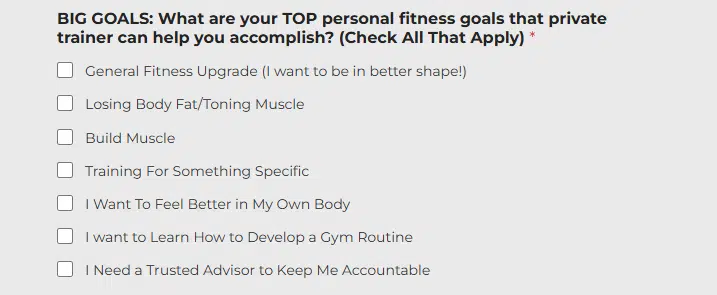
The main part is your basic details like name, age, gender, weight, height, and the best way to contact you. Aside from that, you need to fill in several details related to your physical status and fitness goals:
1) Big Goals (your main direction)
Pick what you’re aiming for long-term, like building strength, improving endurance, gaining muscle, or feeling more athletic. Don’t overthink it. Choose what matters most to you right now.
2) Health Goals (What you want to improve or manage)
This is where you can note things like losing weight, increasing flexibility, managing pain, recovering from an injury, or easing stiffness. If something has been holding you back, this is the place to say it.

3) Nutrition Plan (how much help you want)
Choose the level of nutrition support you’re comfortable with. Some people want general guidance, others want meal prep paired with their workouts, and both are totally fine. You can also opt out of nutrition-based meals if you already have a nutritionist or if you have specific medical conditions related to diet and nutrition.

4) Timeline (your expectations)
This helps maintain a realistic pace. Whether your goal is long and steady progress with a personal trainer, or you just want some education on how to take care of yourself, it helps us plan in a way that fits your life and avoids burnout.

5) Availability (your real schedule)
This might be the most important part. The best plan is the one you can actually follow. The more honest you are about your schedule, the more realistic (and successful) your program will be.

6 . And then the rest of the field is your personal notes
Once you submit the questionnaire and complete your in-person assessment, that’s where the real personalization begins. This is the part most beginners are looking for, because instead of pulling random workouts from the internet, you’ll get a plan built around your goals, schedule, fitness level, and any limitations or injuries.
In the next section, we’ll break down exactly how we create a custom workout plan, what “personalized” actually means, and how we choose the right mix of strength, cardio, and recovery so your routine feels doable, and keeps working as you progress.
Custom Workout Plans
How We Create a Personalized Gym Plan Just for You
Your goal right now
(fat loss, strength, muscle gain, performance, recovery, or “I just want to feel better”)
Your starting point
Beginner, returning after a long break, or already active but stuck)
Your limitations
(injuries, pain, stiffness, low energy, or time constraints)
Your consistency level
(how many days you can realistically train each week)
That’s what “custom” really means: the plan fits you, and it changes as you do.
Training Types Explained: Strength, Cardio, and Hybrid
Most people think training has to be either lifting weights or doing cardio. In real life, the best plan is often a mix, just adjusted to your goal and comfort level.
Strength Training (Build strength, muscle, and confidence)
This focuses on learning proper form, improving posture, and progressively getting stronger over time. For beginners, strength training is usually the fastest way to feel “real progress,” because you can literally measure it—more control, better movement, heavier weights, less pain, more confidence.
Cardio Training (Improve endurance, heart health, and energy)
Cardio isn’t punishment. When it’s programmed correctly, it supports fat loss, recovery, and overall fitness, without burning you out. Cardio can be walking, cycling, incline treadmill work, intervals, or conditioning circuits. The goal is to build stamina in a way you can actually keep doing.
Hybrid Training (The “best of both” approach)
Hybrid plans combine strength and cardio in a balanced way. This is a popular option for beginners who want to lose fat, build strength, and feel more athletic without spending hours in the gym or going to extremes.
A good trainer doesn’t force you into one identity (“you’re a lifter” or “you’re a cardio person”). They build a plan that meets your needs.
Weekly Training Splits (2, 3, 4, or 5 Days)
2 Days Per Week: Best for Busy Beginners
This is great if you’re starting from scratch or coming back after time away. With two well-planned sessions, you can build strength, improve movement, and create consistency without feeling overwhelmed.
A common setup:
- 2 full-body strength sessions
- Light cardio and walking on off-days (optional)

3 Days Per Week: Best for Progress Without Burnout
Three days is often the “sweet spot” for beginners who want results while still balancing work, family, and life. It allows enough volume for strength and muscle-building, while keeping recovery manageable.
A common setup:
- Full-body strength + light conditioning or
- Upper / Lower / Full-body
4 Days Per Week: Best for Faster Results and More Structure
Four days gives you more room to split training by muscle groups, build muscle more efficiently, and add conditioning without rushing workouts.
A common setup:
- Upper / Lower split (repeat), or
- Strength days + conditioning days
5 Days Per Week: Best for Advanced Consistency or Specific Goals
This is for people who genuinely enjoy training often, or have specific physique or performance goals and the recovery habits to match. For beginners, this can work, but only if sleep, stress, and nutrition are also in a good place.
A common setup:
- Strength-focused plan + structured cardio
- More attention to recovery and fatigue management
The key is this: more days aren’t always better. Better planning is better.
What “Personalized” Training Really Means at MPHG
A personalized plan doesn’t mean you get a fancy spreadsheet and never change it again.
It means:
- Your workouts are built around your goals and your schedule
- Your exercises are chosen based on how your body moves
- Your plan is adjusted when life happens (work stress, travel, soreness, injuries)
- You get progressions that make sense instead of random “harder” workouts
Most beginners don’t need more intensity; they need direction. And that’s what a custom plan provides: a routine you can repeat, improve, and build on, instead of constantly restarting.
In the next section, we’ll talk about the real reasons people hesitate to start personal training and how to move past them without feeling judged or pressured.
Some people train with a coach every session, others train solo between sessions; either way, the plan is built to match your schedule and progress.
Afraid to Start? The Real Reasons People Hesitate (And How to Move Past Them)
POV: “I don’t want to look like a fool.”
Coach: “You won’t. My job is to teach you the basics so you never have to guess again.”
POV: “I don’t have time.”
Coach: “Then we build a plan that fits your schedule, not an imaginary perfect week.”
POV: “I’m worried I’ll waste money.”
Coach: “Fair point. We’ll start with the right level of support so you get clarity first, then commit only if it’s working.”
Want help with the gym side of things, too?
If your hesitation is more about walking into the gym for the first time (membership, what to expect, what to do when you arrive), check out our beginner-friendly membership guide here.
Nutrition Support: How Much Help Do You Need?
Most beginners think nutrition coaching means you’ll be told to eat plain chicken and sadness forever. Not true. At MPHG, nutrition support can be as light or as structured as you want. Think of it like a slider, not a strict rulebook:
And if you’re already working with a nutritionist or have medical dietary needs, that’s fine too. Training can still be effective with nutrition support tailored to your situation.
Level 1: “I’m Pretty Set With Nutrition “(minimal support)
This is for you if:
- You already have a routine that works
- You’re working with a nutritionist
- You prefer to focus on workouts first
Level 2: “I want a clear plan because I’m tired of guessing.” General Guidelines
You want structure or a meal plan: what to eat more of, what to reduce, and how to build meals that support your training without turning life into a spreadsheet.
This is for you if you want:
Simple nutrition rules you can actually follow
Better food choices without a complicated plan
Support that feels flexible, not stressful
Level 3: “I want help staying consistent.” Daily Planning
- clearer meal structure and routine
- help staying consistent day to day
- guidance that supports your training and recovery
Bottom line: you don’t need a perfect diet. You need a realistic approach you can stick with.
Some trainers may also give you guidance around calories and macros, not to turn your life into math, but to give you a clearer target. Calories matter for weight change, and macros (protein, carbs, and fats) affect how you feel, recover, and perform.
For many beginners, the biggest “trainer basics” are simple: eat enough protein, build balanced meals, and make sure your intake supports your goal (fat loss, muscle gain, or maintenance). If tracking isn’t your thing, you can still use portions or meal templates. And if tracking helps you stay consistent, your trainer can show you a realistic way to do it without obsessing.
Your Personalized Fitness Journey Start Now, Book a Free Session today
Personal training isn’t about being perfect. It’s about having a plan that fits your life, a coach who meets you where you are, and a starting point you don’t have to guess.
If you’ve been hesitating, overthinking, or waiting until you feel “ready,” here’s the truth: most people don’t feel ready. They just start with support.
Prefer to talk first? Let us know how you’d like to be contacted: via Text, Email, or Call.
No pressure. Just a clear next step.
Every pro was once a beginner. Your turn starts here.
Get full gym access, classes, and guidance designed to help beginners stay consistent.
References:
(2025). Advantages of Getting A Personal Training Certification. ActiveBeat. https://activebeat.com/your-health/advantages-of-getting-a-personal-training-certification/
(2025). Small Group Personal Training. Altered Athletics, Scottsdale, AZ. https://www.alteredathletics.com/small-group-training/
(n.d.). Fitness Assessment Protocols. TrainerMetrics. https://www.trainermetrics.com/guide/fitness-assessment-protocols/
Staff, M. C. (2025). Fitness training: Elements of a well-rounded routine. Mayo Clinic. https://www.mayoclinic.org/healthy-lifestyle/fitness/in-depth/fitness-training/art-20044792
(2025). The Power of Personal Training: 9 Benefits of Working with a Certified Trainer. YMCA of the Fox Cities. https://www.ymcafoxcities.org/blog/power-personal-training-9-benefits-working-certified-trainer
FIGHT LIKE A GIRL | opteamfit https://www.opteamfit.com/nutrition
The Best Muscle Data API For Worldwide GYM Centers – REST API Developers https://restapidevelopers.com/api/the-best-muscle-data-api-for-worldwide-gym-centers/